13" disky
 14" disky
 15" disky
 16" disky
 17" disky
 18" disky
 19" disky
 20" disky
 21" disky
 22" disky
 23" disky
 13" disky
 14" disky
 15" disky
 16" disky
 17" disky
 18" disky
 19" disky
 20" disky
 21" disky
 22" disky
 23" disky
 24" disky
 TPMS SNÍMAČ bez hľadania podľa auta
 SNÍMAČE TPMS ABARTH
 SNÍMAČE TPMS ALFA ROMEO
 SNÍMAČE TPMS ALPINE
 SNÍMAČE TPMS ASTON MARTIN
 SNÍMAČE TPMS AUDI
 SNÍMAČE TPMS ALPINA
 SNÍMAČE TPMS AIWAYS
 SNÍMAČE TPMS BENTLEY
 SNÍMAČE TPMS BORGWARD
 SNÍMAČE TPMS BMW
 SNÍMAČE TPMS BUICK
 SNÍMAČE TPMS CADILLAC
 SNÍMAČE TPMS GEELY
 SNÍMAČE TPMS CHEVROLET
 SNÍMAČE TPMS CHRYSLER
 SNÍMAČE TPMS CITROEN/DS
 SNÍMAČE TPMS DACIA
 SNÍMAČE TPMS DAEWOO
 SNÍMAČE TPMS DODGE
 SNÍMAČE TPMS FERRARI
 SNÍMAČE TPMS FIAT
 SNÍMAČE TPMS FORD
 SNÍMAČE TPMS GENESIS
 SNÍMAČE TPMS HOLDEN
 SNÍMAČE TPMS HONDA
 SNÍMAČE TPMS HSV
 SNÍMAČE TPMS HYUNDAI
 SNÍMAČE TPMS HUMMER
 SNÍMAČE TPMS INFINITI
 SNÍMAČE TPMS IVECO
 SNÍMAČE TPMS ISUZU
 SNÍMAČE TPMS JAGUAR
 SNÍMAČE TPMS JEEP
 SNÍMAČE TPMS KIA
 SNÍMAČE TPMS LADA
 SNÍMAČE TPMS LAMBORGHINI
 SNÍMAČE TPMS LANCIA
 SNÍMAČE TPMS LAND ROVER
 SNÍMAČE TPMS LEXUS
 SNÍMAČE TPMS LOTUS
 SNÍMAČE TPMS MAN
 SNÍMAČE TPMS MASERATI
 SNÍMAČE TPMS MAYBACH
 SNÍMAČE TPMS MAZDA
 SNÍMAČE TPMS MAXUS
 SNÍMAČE TPMS MCLAREN
 SNÍMAČE TPMS MERCEDES
 SNÍMAČE TPMS MG
 SNÍMAČE TPMS MINI
 SNÍMAČE TPMS MITSUBISHI
 SNÍMAČE TPMS NISSAN
 SNÍMAČE TPMS OPEL
 SNÍMAČE TPMS PEUGEOT
 SNÍMAČE TPMS PORSCHE
 SNÍMAČE TPMS RAM
 SNÍMAČE TPMS RENAULT
 SNÍMAČE TPMS ROLLS ROYCE
 SNÍMAČE TPMS SAAB
 SNÍMAČE TPMS SKODA
 SNÍMAČE TPMS SMART
 SNÍMAČE TPMS SSANGYONG/KGM
 SNÍMAČE TPMS SUBARU
 SNÍMAČE TPMS SUZUKI
 SNÍMAČE TPMS TESLA
 SNÍMAČE TPMS TOYOTA
 SNÍMAČE TPMS VOLKSWAGEN
 SNÍMAČE TPMS VOLVO
 15" KOVANÉ DISKY
 16" KOVANÉ DISKY
 17" KOVANÉ DISKY
 18" KOVANÉ DISKY
 19" KOVANÉ DISKY
 20" KOVANÉ DISKY
 21" KOVANÉ DISKY
 22" KOVANÉ DISKY
 23" KOVANÉ DISKY
 24" KOVANÉ DISKY
 17" KOVANÉ DISKY (6061 T6 Aluminium)
 18" KOVANÉ DISKY (6061 T6 Aluminium)
 19" KOVANÉ DISKY (6061 T6 Aluminium)
 20" KOVANÉ DISKY (6061 T6 Aluminium)
 21" KOVANÉ DISKY (6061 T6 Aluminium)
 22" KOVANÉ DISKY (6061 T6 Aluminium)
 23" KOVANÉ DISKY (6061 T6 Aluminium)
 24" KOVANÉ DISKY (6061 T6 Aluminium)
 14" disky
 15" disky
 16" disky
 17" disky
 18" disky
 19" disky
 20" disky
 21" disky
 22" disky
 23" disky
 24" disky
 26" disky
 28" disky
 30" disky
 15" disky
 16" disky
 17" disky
 18" disky
 19" disky
 20" disky
 PLECHOVÉ DISKY NISSAN

Most lightweight alloy-wheel technologies try to improve what happens after a wheel has been cast. TURBU takes a different approach: it attempts to create a lighter, more precise wheel already during the casting process itself — while still allowing Flow Forming to be added afterwards.
Published: 16 October 2026 | Technical analysis by Michal Lavo
TURBU is a pressure-casting process developed by Entec-Stracon for manufacturing lightweight aluminium wheels.
Instead of relying mainly on additional machining or mechanical forming to remove weight later, the process aims to produce a thinner, near-net-shape casting through rapid mould filling, reduced melt turbulence, vacuum assistance and tightly controlled solidification.
The important distinction is simple: TURBU changes the casting itself. Flow Forming changes part of the wheel after casting. And the two technologies can be combined.
First: where does TURBU fit among wheel manufacturing technologies?
Before looking at the details, it helps to place TURBU within the manufacturing processes already familiar to the wheel industry.
| Process | Where optimisation happens | Basic principle |
|---|---|---|
| Conventional low-pressure casting | Casting | Molten aluminium fills a mould under relatively low pressure, followed by further processing and machining. |
| TURBU / pressure casting | Casting | Rapid pressure filling, reduced turbulence, vacuum and tightly controlled thermal conditions aim to produce a lighter near-net-shape casting. |
| Flow Forming | After casting | Rollers mechanically form mainly the rim section of a cast wheel blank, changing its geometry and material properties. |
| Forging | Material forming before final machining | An aluminium billet is plastically formed under high pressure and subsequently machined into the final wheel geometry. |
Why change the way an alloy wheel is cast?
Conventional low-pressure casting is a mature and highly effective manufacturing process. It is capable of producing high-quality aluminium wheels in very large volumes.
But every casting process imposes manufacturing constraints on the designer.
According to the TURBU development documentation, conventional low-pressure wheel casting typically reaches a practical minimum cast wall thickness of around 6 mm. Below this range, the aluminium can begin to solidify before the mould cavity is filled reliably.
This means that a wheel designer cannot simply define the exact final geometry and expect it to be cast directly.
A manufacturable casting blank must first be produced. Material can then be removed by machining, and the conventional manufacturing route can also include T6 heat treatment to achieve the required material properties.
Conventional route:
more robust casting blank → heat treatment → substantial machining → finished wheel
TURBU concept:
lighter near-net-shape casting → fewer downstream operations → finished wheel
The potential advantage is therefore not simply that less material remains in the final wheel. The process attempts to avoid putting some of that excess aluminium into the casting in the first place.
Modern wheels face a difficult engineering contradiction
The development project also highlights a broader problem facing modern wheel engineering.
Vehicle manufacturers want to reduce mass, yet wheels on large SUVs, performance vehicles and electric vehicles may simultaneously need to carry higher loads.
The TURBU project documentation gives the example of an 18-inch aluminium wheel that historically might have weighed around 12 kg and been designed for a load of approximately 690 kg. For modern heavy vehicles, required wheel loads can exceed 800 kg and in some applications approach 1,000 kg.
If the manufacturing technology and basic design approach remain unchanged, increasing the required load capacity can mean adding material.
Vehicle manufacturers need lower mass, while the wheel itself may be required to carry more load.
Flow Forming is already one established answer to this problem. TURBU approaches it from another direction: optimisation begins before the wheel leaves the mould.
How does TURBU work?
The core idea is not simply to inject molten aluminium into a mould at higher pressure.
Fast filling alone can be problematic. Uncontrolled melt flow can entrain gases and oxide films, contributing to porosity and other casting defects. In a safety-critical component exposed to cyclic loading, the quality of the casting structure matters greatly.
TURBU therefore combines several elements:
- rapid pressure-assisted mould filling,
- controlled, low-turbulence melt flow,
- vacuum assistance,
- carefully controlled melt and mould temperatures,
- rapid solidification and cooling,
- and extensive process monitoring.
The resulting material properties depend not only on pressure but also on alloy chemistry, melt quality, temperature, timing and cooling conditions.
This is why TURBU should not be understood simply as “ordinary high-pressure die casting applied to a wheel”. The process is a controlled combination of material, melt flow, pressure, vacuum and thermal management.
The alloy is part of the process
The development programme investigated different alloy compositions and processing conditions.
One material identified as particularly suitable was AlSi10MnMg, commercially available in variants such as Rheinfelden's Silafont-36.
For an automotive wheel, however, maximum tensile strength alone is not enough. A wheel experiences repeated bending, radial loading and impacts throughout its service life. Strength therefore has to be considered together with ductility and fatigue behaviour.
One result from the development work illustrates how sensitive the relationship can be.
With one investigated composition of approximately 10.5% silicon and 0.35% magnesium, the wheel did not pass the required rotating bending test. After the composition was changed to approximately 9.5% silicon and 0.25% magnesium, the test was passed.
The lesson is important: TURBU is not merely a machine or casting technique. Alloy composition and process control form one engineering system.
17.5 kg vs 13 kg: the number that attracts attention
The TURBU development programme did not rely only on theoretical simulations. Its material and energy balance was compared with real production data supplied by wheel manufacturer BBS.
| Production stage | Low-pressure casting | TURBU |
|---|---|---|
| Weight after casting | 25.7 kg | 23.5 kg |
| Blank after gating removal | 25.5 kg | 19.0 kg |
| Material removed by machining | approx. 7.8 kg | approx. 6.0 kg |
| Finished wheel | 17.5 kg | 13.0 kg |
The difference in the finished wheel is 4.5 kg, or approximately 26%.
Important limitation: this does not mean that every TURBU wheel will be 26% lighter. It is a specific comparison documented during the development project. The BBS data represent production of a low-pressure-cast wheel; this is not a comparison between TURBU and a forged BBS wheel.
Why can the TURBU wheel be lighter?
The difference between 25.7 kg and 23.5 kg immediately after casting is only part of the story.
The more important difference appears further along the production chain.
A near-net-shape casting can reduce the amount of aluminium that must first be cast only to be removed again during machining.
Entec-Stracon states that the process has the potential to reduce aluminium consumption by up to 40%, machining time by up to 80%, and energy consumption by approximately 50%.
These figures should be understood as reported process potential rather than guaranteed values for every wheel geometry or production line.
Another major difference is that the investigated TURBU production route does not rely on the conventional downstream T6 heat-treatment stage used in traditional low-pressure-cast wheel production.
The required properties must instead emerge from the correct alloy, casting conditions, solidification and cooling process.
The trade-off: TURBU has a narrow process window
Removing manufacturing steps does not make the process inherently simpler.
T6 heat treatment in a conventional production route can help develop and homogenise material properties after casting. TURBU omits this stage, placing greater demands on the quality and repeatability of the casting itself.
The final development report explicitly describes a very narrow process window.
During one production cycle, the system can generate approximately 20,000 measured values while working with around 220 adjustable parameters. A human operator cannot continuously evaluate and correct this volume of process information during a cycle lasting only a few minutes.
This is where automated process control and artificial intelligence become relevant.
The price of eliminating manufacturing steps is tighter process control. TURBU is not simpler casting; it is more precisely controlled casting intended to enable a shorter manufacturing route and a lighter final product.
But is a lighter TURBU wheel safe?
For an automotive wheel, a strong material specimen is not enough.
What ultimately matters is the behaviour of the complete wheel.
During the development programme, complete wheels were cast in different configurations, machined, coated and subjected to wheel-level testing. Material samples were also taken from finished components to investigate strength and ductility.
This distinction is fundamental.
A new alloy may show impressive mechanical properties in a laboratory specimen, but a real wheel combines: material + geometry + manufacturing process + local stress distribution + complete-wheel performance.
This is also why comparing manufacturing technologies and comparing wheel safety standards are two different questions.
TURBU vs Flow Forming? That may be the wrong question
At first glance, TURBU could appear to be a competitor to Flow Forming.
Flow Forming is already used to reduce wheel mass and improve material properties, particularly in the rim section. After casting, rollers mechanically form the rim of the wheel blank.
If TURBU can reduce weight during casting itself, it might therefore seem that Flow Forming becomes unnecessary.
The development programme demonstrated the opposite.
TURBU and Flow Forming can be combined.
Two stages of lightweight optimisation
Stage 1 — TURBU
Optimisation begins during casting. In the documented comparison, the finished wheel reached 13 kg instead of 17.5 kg for the compared low-pressure-cast production route.
Stage 2 — TURBU + Flow Forming
The rim can subsequently be mechanically formed. In an earlier development phase, an approximately 3 mm cast section was reduced to around 2.3 mm through Flow Forming.
The percentage savings cannot simply be added together. Flow Forming primarily affects the rim region and the final result depends on the individual wheel design.
But the engineering principle is clear: the new casting process and subsequent mechanical forming are not mutually exclusive.
TURBU optimises the casting. Flow Forming can optimise the rim afterwards. The two processes can therefore be sequential rather than competing technologies.
Could TURBU give wheel designers more freedom?
Reducing minimum cast-section thickness does more than reduce weight. It changes the geometries that can potentially be manufactured.
With conventional casting, a fine or thin feature may be difficult not because it is structurally undesirable, but because molten aluminium cannot reliably fill and solidify in that geometry.
The TURBU development programme worked with real wheel geometries during different stages of the project, including designs associated with BORBET, CMS and BBS.
The documentation describes a CMS geometry that, according to the project team, could not be produced in the required form using the conventional low-pressure process used for comparison. Later development work also used a BBS wheel geometry, including experiments involving Flow Forming.
The potential advantage is therefore not merely to “remove aluminium”. The designer may gain more freedom to place material where the wheel structurally needs it instead of where the casting process requires it.
Why is recycled aluminium important to TURBU?
Another part of the development programme investigated whether a safety-critical wheel could be produced with a much higher proportion of recycled aluminium.
TURBU wheels were produced during the project using up to 100% recycled material. According to the final report, properly controlled chemistry and process conditions did not reveal a fundamental reason preventing such material from being used.
But “100% recycled aluminium” does not mean arbitrary scrap aluminium.
The reports devote considerable attention to:
- alloy chemistry,
- trace elements,
- oxidation,
- melt cleanliness,
- and precise process conditions.
Less waste before machining even begins
Near-net-shape casting can also change the character of manufacturing waste.
Conventional machining creates aluminium chips with a large surface area that can be contaminated by cutting fluids. Recycling this material is more complicated than simply remelting a clean solid piece of aluminium.
When less machining is required, a greater proportion of returned material can instead consist of relatively compact casting-system material such as runners and overflow sections.
The sustainability argument is therefore broader than final wheel mass. It concerns how much primary material enters the process, how much must later be machined away, what form the production scrap takes and how much energy the entire manufacturing route requires.
Is TURBU better than a forged wheel?
Current evidence does not support that conclusion.
The technologies work differently.
A forged wheel begins with an aluminium billet that is plastically formed under high pressure and then extensively machined into its final geometry. Forging can achieve excellent mechanical properties and low mass, but it is also a more demanding and generally more expensive manufacturing route.
TURBU remains a casting technology. Its objective is to improve the relationship between weight, material properties, manufacturing time and material consumption within a process suitable for industrial production.
The development reports currently available compare TURBU primarily with conventional low-pressure casting. They do not provide a controlled comparison of the same wheel design manufactured once by TURBU and once by forging.
What we cannot yet say That TURBU is inherently lighter, stronger or better than an equivalent forged wheel.
From research project to a production BMW wheel
TURBU did not suddenly appear in 2026.
Entec-Stracon began developing turbulence-reduced pressure casting in 2017. Feasibility studies, patent applications, hundreds of experimental castings and several development projects followed.
A later development stage involved machine manufacturer Oskar Frech and a dedicated pressure-casting cell. The central question gradually changed from:
“Can a wheel be produced this way?”
to:
“Can the process be controlled reliably enough for industrial series production?”
In 2026, an important piece of evidence arrived.
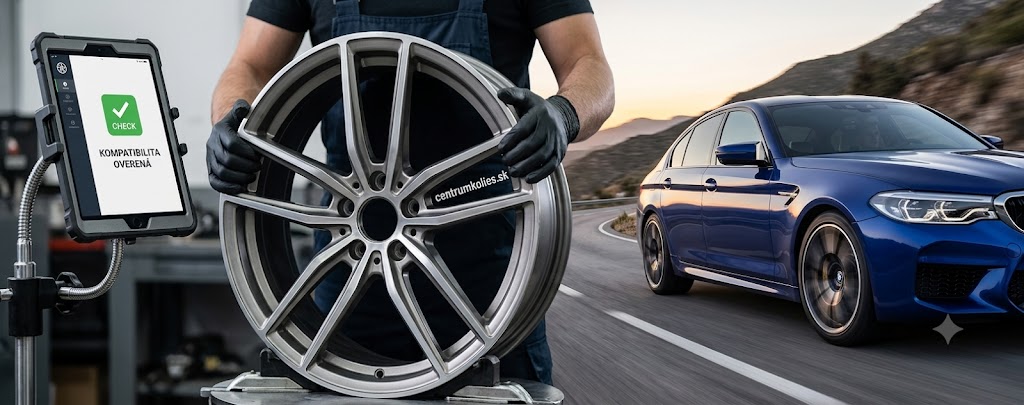
BMW announced new 20- and 21-inch M Performance 1075 M wheels for the BMW M5 using a High Pressure Casting process developed by Entec-Stracon.
BMW describes the production technology as High Pressure Casting (HPC). According to BMW, the mould is filled under high pressure and vacuum in approximately 0.05 seconds, while around 80 sensors and an AI-supported system monitor the production process.
BMW states that the process can approximately halve energy consumption and reduce wheel weight by up to 20% while maintaining the required properties.
TURBU, conventional casting, Flow Forming and forging: the practical comparison
| Characteristic | Low-pressure casting | TURBU | Flow Forming | Forging |
|---|---|---|---|---|
| Fundamental process | Casting | Pressure casting | Mechanical forming after casting | Plastic forming of billet |
| Main optimisation stage | Casting + downstream processing | Casting itself | Primarily rim section | Material forming + machining |
| Can be combined with Flow Forming? | Yes | Yes | — | Not the comparison addressed here |
| Near-net-shape objective | More limited | Central objective | Not the initial casting stage | Different manufacturing route |
| Current evidence in TURBU project | Primary reference process | Development + production application | Combination demonstrated | No equivalent direct comparison available |
What should we take away from TURBU?
TURBU is not simply a new marketing name for a conventional cast wheel. It represents an attempt to move more of the lightweight optimisation into the moment when the wheel is first created in the mould.
The most important findings so far are:
- the documented development comparison reduced finished-wheel mass from 17.5 kg to 13.0 kg compared with the investigated low-pressure production route,
- TURBU can be combined with Flow Forming rather than necessarily replacing it,
- the process can enable thinner cast geometries and greater near-net-shape production,
- the investigated route avoids conventional downstream T6 heat treatment,
- development work demonstrated wheels produced from up to 100% recycled material under controlled metallurgical conditions,
- the process requires exceptionally tight monitoring and control,
- and the underlying technology has now moved towards a real production automotive application.
The most interesting question is therefore no longer whether TURBU can produce an automotive wheel. It is where this technology will eventually sit between conventional casting, Flow Forming and forged-wheel manufacturing.
Sources and research notes
This article is based primarily on original technical reports from the TURBU development programme rather than retailer or aftermarket marketing materials.
- ENTEC-STRACON GmbH / Deutsche Bundesstiftung Umwelt (DBU)
TURBU-DRUCK-GIESSEN – Ressourcenschonende Räderherstellung mit recyceltem Material und optimaler Zellennutzung, final report, project AZ 38505/01, 2024.
Technical report → - ENTEC-STRACON GmbH / Oskar Frech GmbH & Co. KG / Deutsche Bundesstiftung Umwelt
Entwicklung eines druckbeaufschlagten turbulenzarmen Gießprozesses – 2. Phase, project AZ 37339/01. The report documents, among other subjects, development work involving Flow Forming and BORBET, CMS and BBS wheel geometries.
Technical report → - Deutsche Bundesstiftung Umwelt
Project 38505/01 — Ressourcenschonende Räderherstellung mit recyceltem Material und optimaler Zellennutzung.
DBU project database → - Deutsche Bundesstiftung Umwelt
Project 37339/01 — Entwicklung eines druckbeaufschlagten turbulenzarmen Gießprozesses (2. Phase).
DBU project database → - ENTEC-STRACON GmbH
Technical information on TURBU Pressure Casting, including material use, machining, energy consumption and manufacturing potential.
TURBU Pressure Casting → - BMW Group
BMW model updates, autumn 2026 — production application of the High Pressure Casting process developed by Entec-Stracon for the M Performance 1075 M wheel for the BMW M5.
BMW Group PressClub →
Frequently asked questions
What is TURBU wheel casting?
TURBU is a pressure-casting process for aluminium wheels developed by Entec-Stracon. It combines rapid mould filling, reduced melt turbulence, vacuum assistance and tightly controlled thermal conditions to produce a lighter casting closer to the final wheel geometry.
Is TURBU the same as High Pressure Casting?
TURBU is the name used for the Entec-Stracon development programme and pressure-casting technology. BMW describes the process used for its new M Performance wheels as High Pressure Casting, or HPC. The BMW application uses a process developed by Entec-Stracon.
Is TURBU the same as Flow Forming?
No. TURBU changes the way the initial wheel is cast. Flow Forming is a subsequent mechanical forming process applied primarily to the rim section. The two technologies can also be combined.
Can TURBU be combined with Flow Forming?
Yes. Development work demonstrated a combination of TURBU casting and subsequent Flow Forming. In one development phase, an approximately 3 mm cast section was reduced to around 2.3 mm after Flow Forming.
Is a TURBU wheel lighter than a conventional cast wheel?
In one documented project comparison, finished-wheel mass decreased from 17.5 kg for the compared low-pressure-cast production route to 13.0 kg for TURBU, a difference of approximately 26%. This is a specific project result and should not be assumed for every wheel design.
Is TURBU better than a forged wheel?
Current published project data do not establish that. TURBU has primarily been compared with conventional low-pressure casting. A controlled comparison of the same wheel design manufactured by TURBU and by forging is not available in the research material used for this article.
Can TURBU use recycled aluminium?
Yes. The development programme produced wheels using up to 100% recycled material. This still requires tightly controlled alloy chemistry, melt quality and manufacturing parameters; it does not mean that arbitrary aluminium scrap can be used.
Does BMW use TURBU technology?
BMW announced M Performance 1075 M wheels for the BMW M5 using a High Pressure Casting process developed by Entec-Stracon. This is significant because it demonstrates movement of the underlying technology from development work towards a real automotive production application.
Author:Michal Lavo · Wheel Research · CentrumKolies.sk